Read IPS, VA and OLED labels with their limits
Compare three real monitor panel labels while separating panel construction,native mode,care requirements and unmeasured image-quality claims.
Updated:
Use the exact model rather than a panel-family stereotype
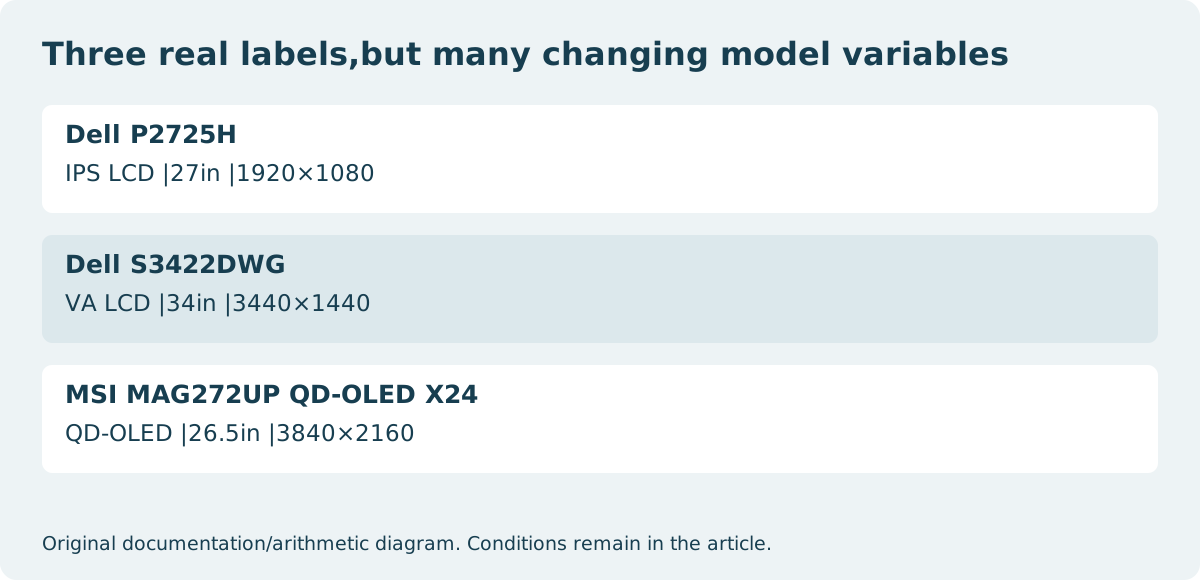
Dell P2725H is documented as an IPS monitor, Dell S3422DWG as Vertical Alignment(VA), and MSI MAG272UP QD-OLED X24 as QD-OLED. Those labels identify real alternatives with different constructions, but do not by themselves establish the best monitor for a task. Start with the actual image mode, physical arrangement and ownership requirements, then use the panel description as one part of the comparison.
IPS and VA describe LCD technologies; these Dell products use LED backlighting. OLED uses light-emitting organic display elements rather than the same backlit-LCD arrangement. QD-OLED is a more specific OLED implementation, not a label that makes every OLED monitor identical. None of these names supplies a complete measurement of your viewing experience.
| Exact model | Manufacturer panel label | Another documented difference to retain |
|---|---|---|
| Dell P2725H | IPS; LED-backlit LCD | 27 inches; 1920×1080 |
| Dell S3422DWG | VA; LED-backlit LCD | 34 inches ultrawide; 3440×1440 |
| MSI MAG272UP QD-OLED X24 | QD-OLED | 26.5 inches panel; 3840×2160 |
Do not attribute every difference between these monitors to the panel label
The three examples also differ in diagonal, native pixel grid, shape, source modes and product purpose. Comparing a 27 inches FullHD model with a 34 inches ultrawide does not isolate IPS versus VA. Comparing either with a 26.5 inches UHD OLED does not isolate one technology variable either. A difference in desk fit or text size can come from geometry and scaling rather than the label alone.
For a purchasing shortlist, first eliminate models that cannot meet the documented source mode or physical brief. A panel family cannot rescue a missing video input or an unsuitable enclosure size. Where two models do meet the functional requirement, the next question can be a specific image characteristic supported by appropriate evidence, rather than an automatic technology ranking.
Read contrast,response time and color claims on their own terms
A manufacturer’s typical contrast ratio, a dynamic-contrast number, a gray-to-gray transition figure and a color-gamut percentage are different measurements with different conditions. Do not combine them into a single winner score or assume that a larger-looking number is directly comparable across every product. Keep the exact mode and measurement wording with the claim.
This page does not independently measure black level, motion artifacts, color accuracy or viewing-angle performance. A family reputation cannot stand in for those missing tests. Manufacturer specifications can help identify a feature or narrow a requirement, but should not be presented as our hands-on result or a guarantee that every application will look better.
Keep OLED ownership requirements in the same comparison
The MSI example has documented OLED care functions and a US datasheet warranty statement including panel burn-in. Those are relevant ownership facts, not proof of zero risk. A buyer using persistent static interfaces should read the exact model’s maintenance instructions and coverage conditions rather than transferring practices from another OLED display.
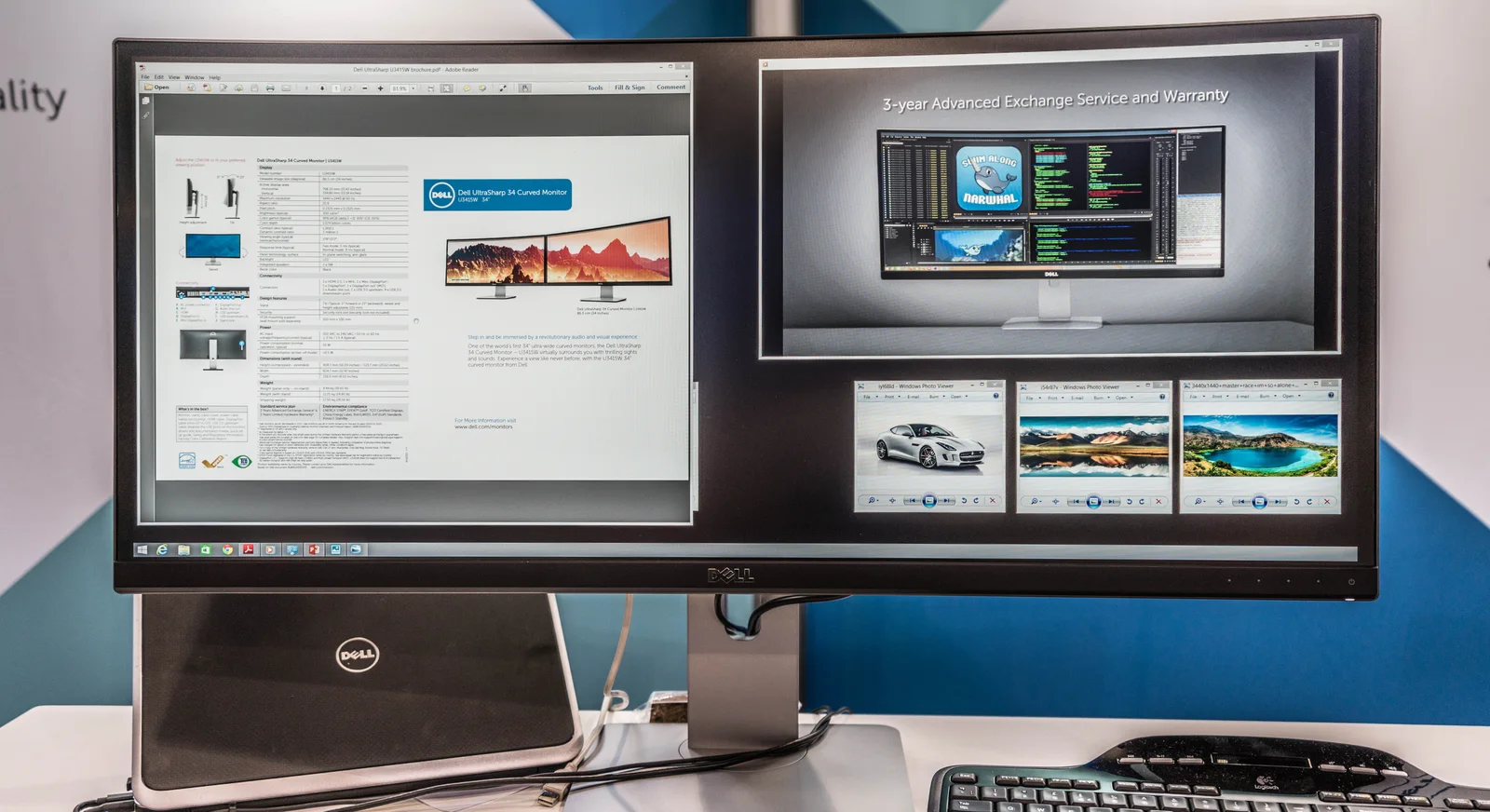
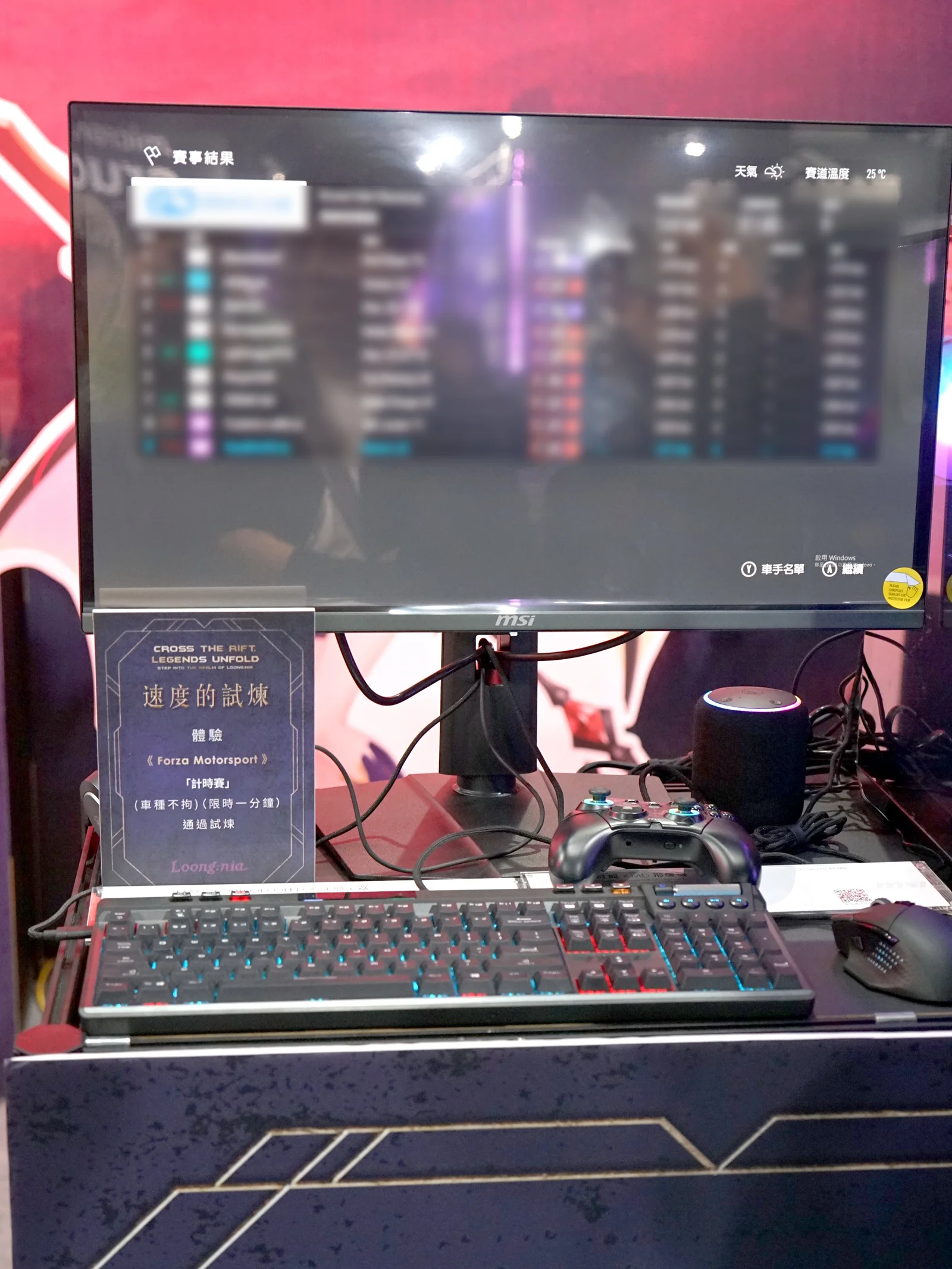
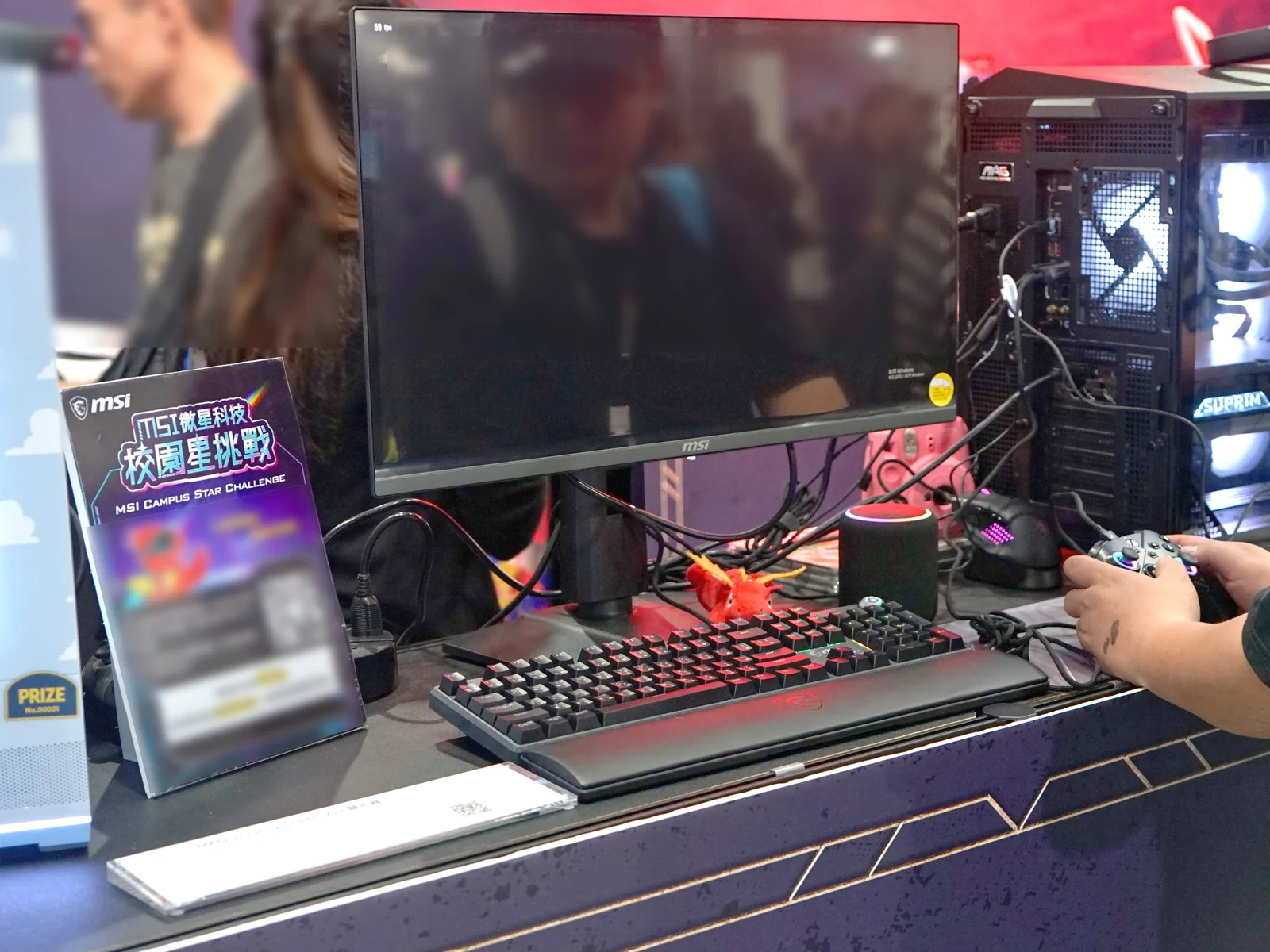
The two exhibition photographs show the same MAG272UP model in separate real captures. They do not compare its color or response with an IPS or VA screen under controlled conditions. The older DellU3415W photograph is another historical monitor, not a picture of P2725H or S3422DWG, and its shape cannot establish the technology of an unrelated model.
Finish with an answerable model comparison
Write a shortlist that names each exact model, panel label, native mode, dimensions, relevant input and any maintenance or support condition affecting the intended use. Choose from that full requirement. For example, a requirement for a particular ultrawide desktop shape can eliminate a 16:9 candidate before an IPS-versus-OLED preference becomes decisive. That is a functional choice, not evidence that one family is universally better.
If the decisive question is an unmeasured characteristic, keep it unresolved until suitable model-specific evidence is available. Do not fill the gap using a booth photograph, a marketing contrast figure or a generic preference. No current deal, stock status, professional color certification or universal best panel is claimed here.